William Utermohlen
Painter · Portraitist · Draughtsman
William Utermohlen (1933–2007) was an American-born figurative painter who made London his home, known for his portraits, narrative painting cycles and intensely personal self-portraits. His work combines a deep engagement with the traditions of figurative painting with a distinctive modern visual language, culminating in the remarkable late self-portraits made following his diagnosis of Alzheimer’s disease.
About William Utermohlen…
William Utermohlen (1933–2007) was an American-born figurative painter who settled in London in 1962 and developed a deeply personal body of work spanning portraiture, still life, drawing, murals and ambitious thematic painting cycles. Born in South Philadelphia, he studied at the Pennsylvania Academy of Fine Arts and the Ruskin School of Art in Oxford, before establishing himself within the London art world. His portraits remained a constant throughout his career, alongside major cycles inspired by Dante, the Philadelphia Mummers Parade, war, the nude and the domestic interior.
Utermohlen's work combined close observation with an increasingly imaginative and psychologically charged approach to figurative painting. His large-scale murals for the Liberal Jewish Synagogue in St John's Wood and the Royal Free Hospital in Hampstead further demonstrated his ability to bring the human figure into expansive, narrative environments.
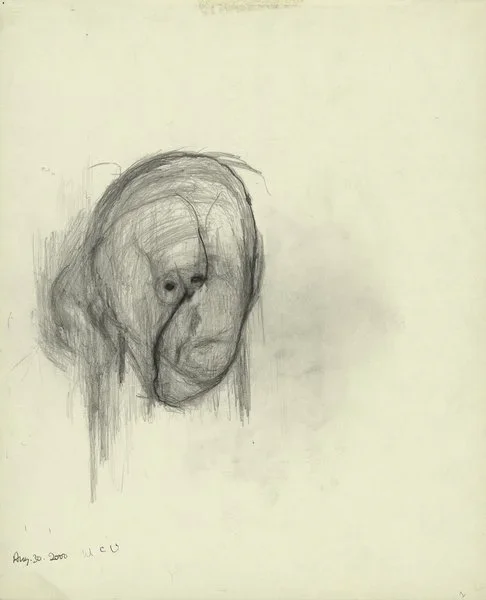
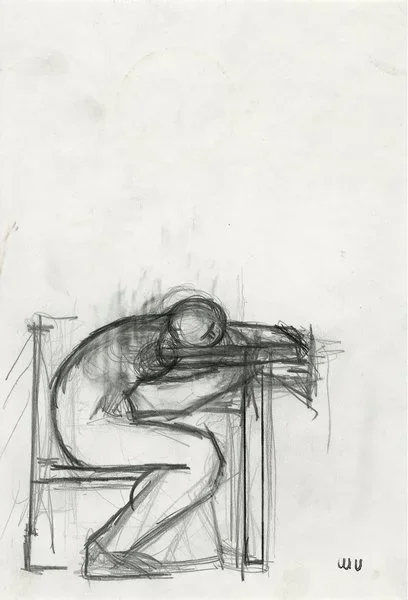
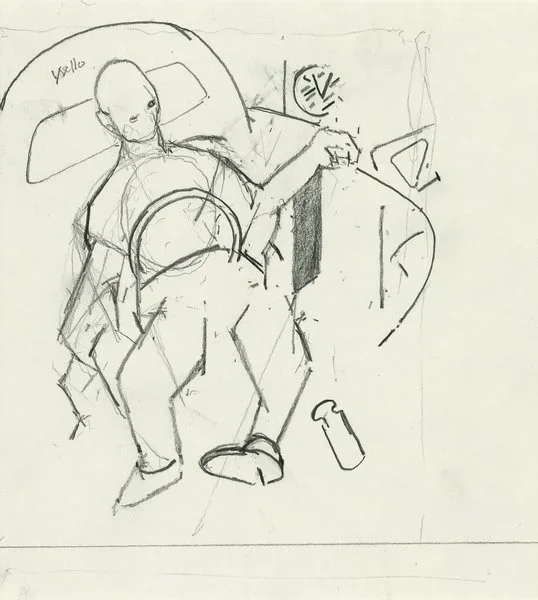
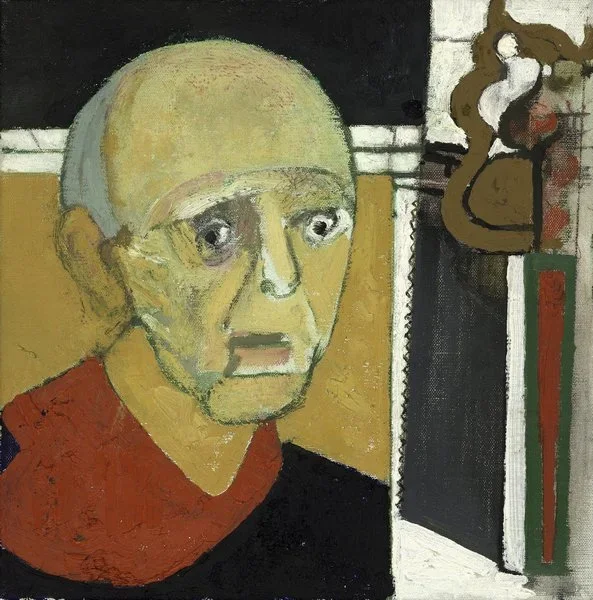
In 1995, Utermohlen was diagnosed with Alzheimer's disease. He continued to work, producing a remarkable series of self-portraits that have since become among his best-known works. Rather than representing a separate episode from his earlier practice, these late works form the final chapter of a lifelong engagement with portraiture, observation and the possibilities of figurative representation. His last drawings were made between 2000 and 2002, and he died in London in 2007.
Art & Practice…
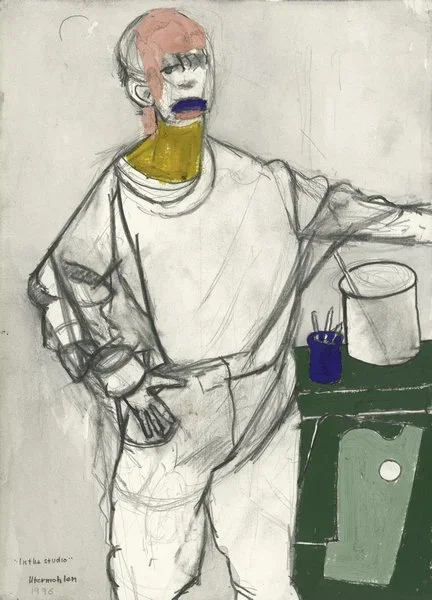
William Utermohlen’s practice was rooted in figurative painting, but his approach to the figure was continually transformed by experimentation with colour, composition, symbolism and visual language. Portraiture remained a constant throughout his career, alongside still life, life drawing and a series of ambitious thematic cycles.
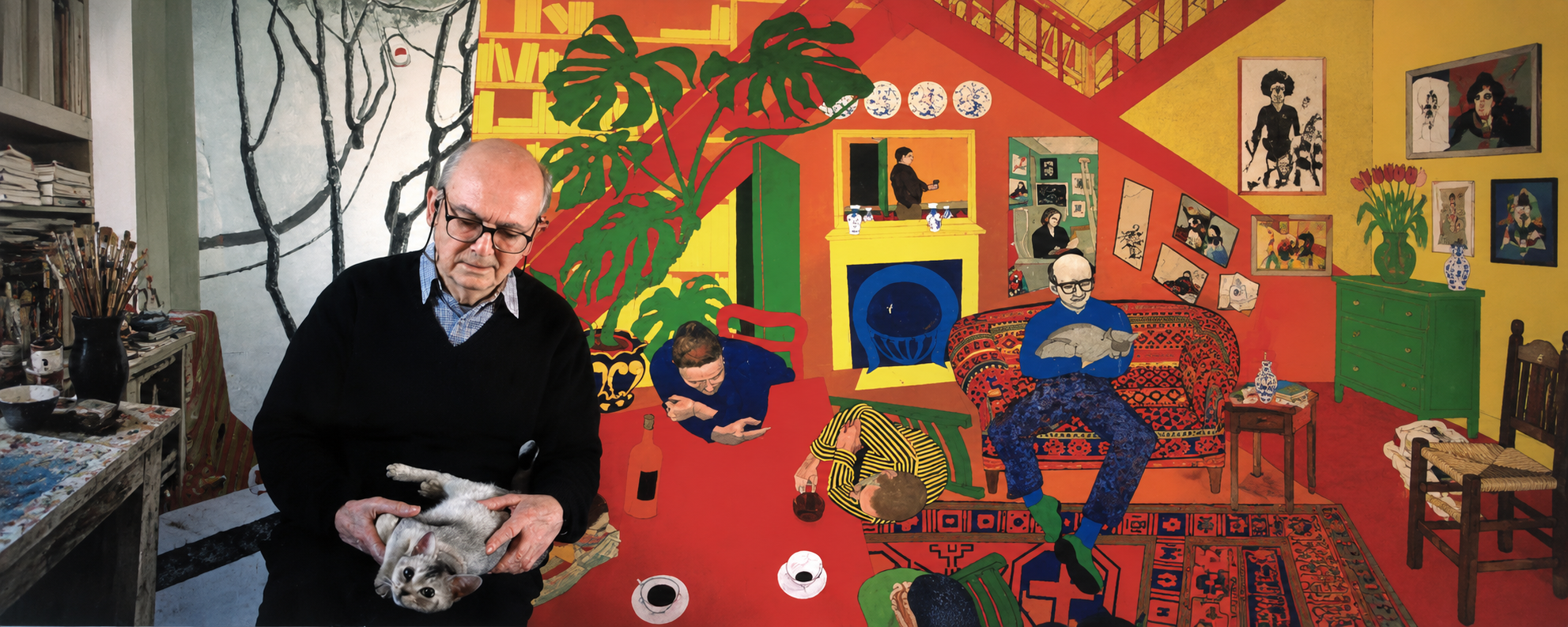
His major cycles demonstrate an artist willing to move between observation and invention. The Dante Cycle (1964–66), comprising paintings inspired by the Inferno, brought together Renaissance draughtsmanship, hard-edged abstraction and elements of Pop Art. The Mummers paintings drew on his South Philadelphia upbringing and the city's New Year's Day parade, while the later Conversation Paintings placed figures within richly constructed domestic interiors.
The human figure is central to Utermohlen’s visual language, but it is rarely treated simply as an object of likeness. His portraits explore relationships between figure, setting and psychological presence, while his large-scale murals expanded these concerns into complex narrative environments. Drawing remained an important parallel practice, providing a more immediate and exploratory means of investigating the body and the face.
Self-portraiture became particularly significant in the final years of his life. Following his diagnosis with Alzheimer’s disease in 1995, Utermohlen continued to paint and draw, producing a series of increasingly reduced and experimental self-portraits. These works have acquired particular significance because they document both his continued commitment to painting and changes in his visual perception, while remaining part of the much longer tradition of self-portraiture that ran throughout his career.
Across his work, Utermohlen’s practice occupies a compelling space between observation and imagination, the personal and the theatrical. His paintings transform lived experience into constructed worlds in which colour, figure, space and memory become inseparable.
Gallery