Stefan Themerson
Filmmaker · Writer · Publisher
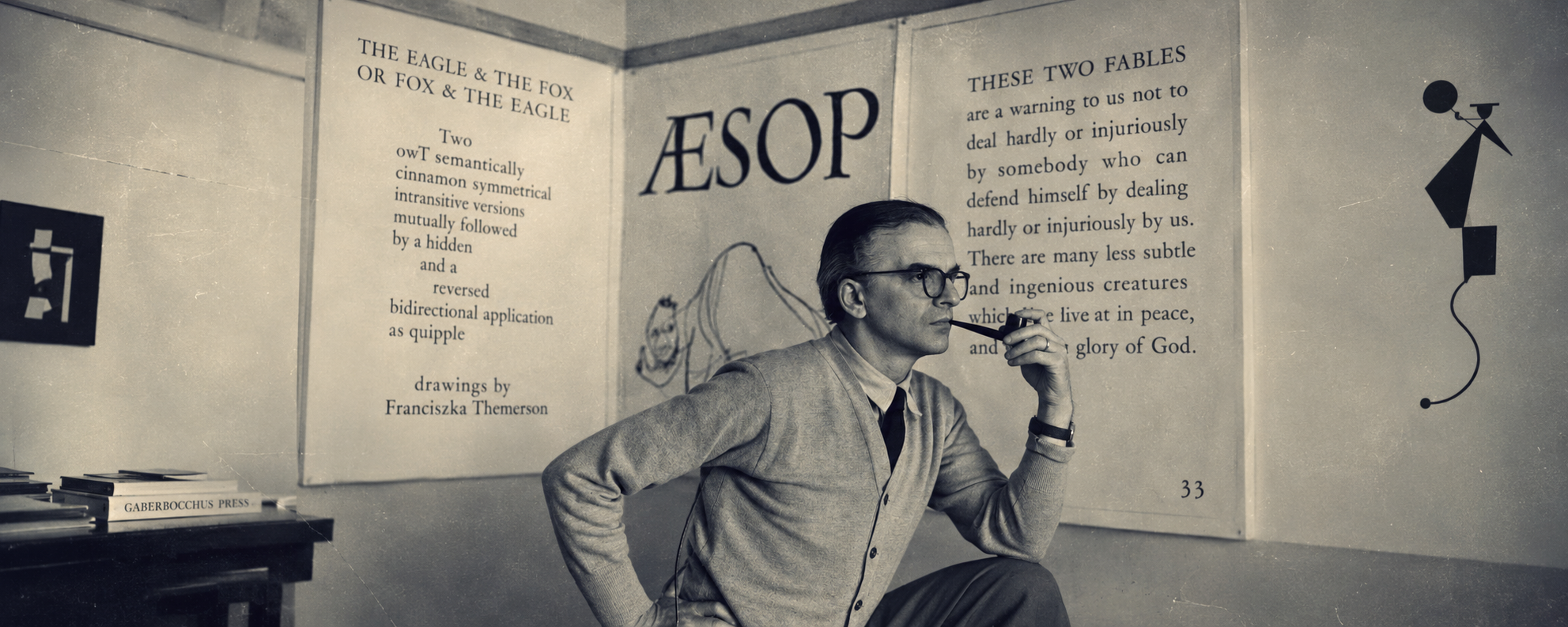
Stefan Themerson was a Polish-born writer, filmmaker, artist and publisher whose multidisciplinary practice challenged conventional boundaries between literature, visual art and cinema. Working with his wife, Franciszka, he pioneered experimental film in Poland before establishing the influential Gaberbocchus Press in London in 1948, where they produced innovative books combining text, image and design.
About Stefan Themerson…
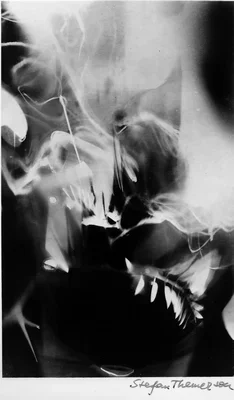
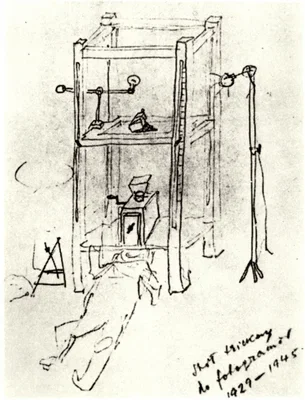
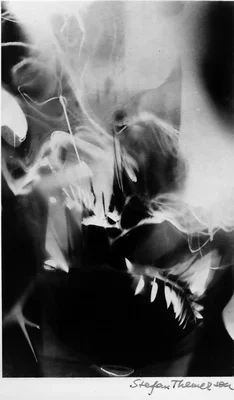
Stefan Themerson (1910–1988) was a Polish-born writer, filmmaker, photographer and publisher whose career crossed the boundaries of literature, cinema, visual art and experimental book design. Alongside his wife, the artist Franciszka Themerson, he made a series of pioneering experimental films in Poland during the 1930s, exploring abstraction, movement and the relationship between sound and image.
The Themersons settled in London during the Second World War, where their creative partnership continued to develop across multiple disciplines. In 1948 they founded Gaberbocchus Press, an independent publishing house that became renowned for its unconventional approach to the book as an artistic form. Their publications brought together literature, illustration, typography and design, often challenging conventional ideas of authorship, reading and visual communication.
Themerson was also a prolific writer, producing novels, essays, poetry, philosophical texts and experimental works of fiction. His writing frequently explored logic, language and the absurd, reflecting the same intellectual curiosity that characterised his films and publishing projects. His work remained deliberately resistant to categorisation, occupying a space between literature, visual art and conceptual experimentation.
Throughout his career, Themerson maintained a commitment to the idea that art should be an active form of thought. Whether working with film, words, images or books, he sought to disrupt familiar ways of seeing and reading, creating works that remain playful, intellectually rigorous and profoundly inventive.
Art & Practice…
Stefan Themerson’s practice was fundamentally interdisciplinary, moving fluidly between film, literature, photography, illustration, typography and publishing. Rather than treating these as separate forms, he used each medium to investigate the same underlying questions: how images communicate, how language shapes perception, and how familiar systems of meaning might be disrupted.
His early films, made with Franciszka Themerson in Poland during the 1930s, emerged from an experimental approach to cinema in which photography, collage, animation, typography and sound were brought into unexpected relationships. Works such as The Eye and the Ear explored the translation of music into visual form, while later films developed a more playful and philosophical engagement with language, movement and perception.
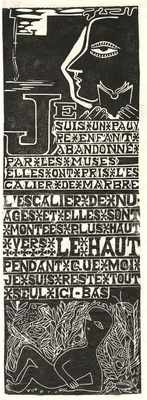
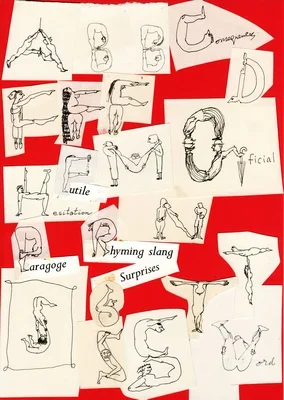
This interest in the relationship between word and image became central to his work with Gaberbocchus Press, founded with Franciszka in London in 1948. The book became an experimental space in which text, typography, illustration, paper and physical form could operate together. Their publications deliberately challenged the conventional distinction between a literary work and an artwork, treating the book itself as a creative object.
Themerson’s writing similarly resists easy categorisation. His novels, essays, poetry and philosophical writings are characterised by linguistic play, logical puzzles, absurdity and an interest in the structures through which people make sense of the world. Language is not simply a vehicle for narrative but a material to be manipulated, rearranged and questioned.
Across film, writing and publishing, Themerson maintained a fascination with systems and their disruption. He took established forms — the film, the book, the sentence, the image — and subjected them to playful experiments that revealed their underlying mechanisms.
His practice ultimately proposes a conception of art as an instrument for thinking: curious, irreverent and resistant to fixed boundaries between disciplines. For Themerson, the most interesting territory lay precisely where one form of expression began to become another.
Gallery