David Heathcote
Artist - Sculptor - Art Historian
David Heathcote (1931–2025) was a British artist, sculptor and art historian whose practice encompassed painting, sculpture, drawing and printmaking. His twenty years living and working in Africa profoundly influenced his work, while his research into Hausa art, textiles and culture became an important part of his wider practice. His paintings and sculptures explore place, memory and form through a distinctive and deeply personal visual language.
About David Heathcote…
David Heathcote (1931–2025) was born in London and studied at Canterbury College of Art before attending the Slade School of Fine Art. His early career developed within the British post-war art scene, where painting remained at the centre of his practice, alongside sculpture, drawing, collage and printmaking.
A formative period of his life was spent living and working in Africa. Over two decades in Zimbabwe and Nigeria, Heathcote developed a profound engagement with African culture, art and material traditions. His experience of the continent informed not only his artistic practice but also his scholarly interests, leading to extensive research into Hausa art, architecture, textiles and craft.
His relationship with Africa was particularly significant in his work as a collector and researcher. He became an authority on Hausa visual culture and published extensively on the subject, helping to bring greater attention to an area of African art that had received comparatively little scholarly attention. His collection of Hausa material culture was subsequently acquired in part by the British Museum.
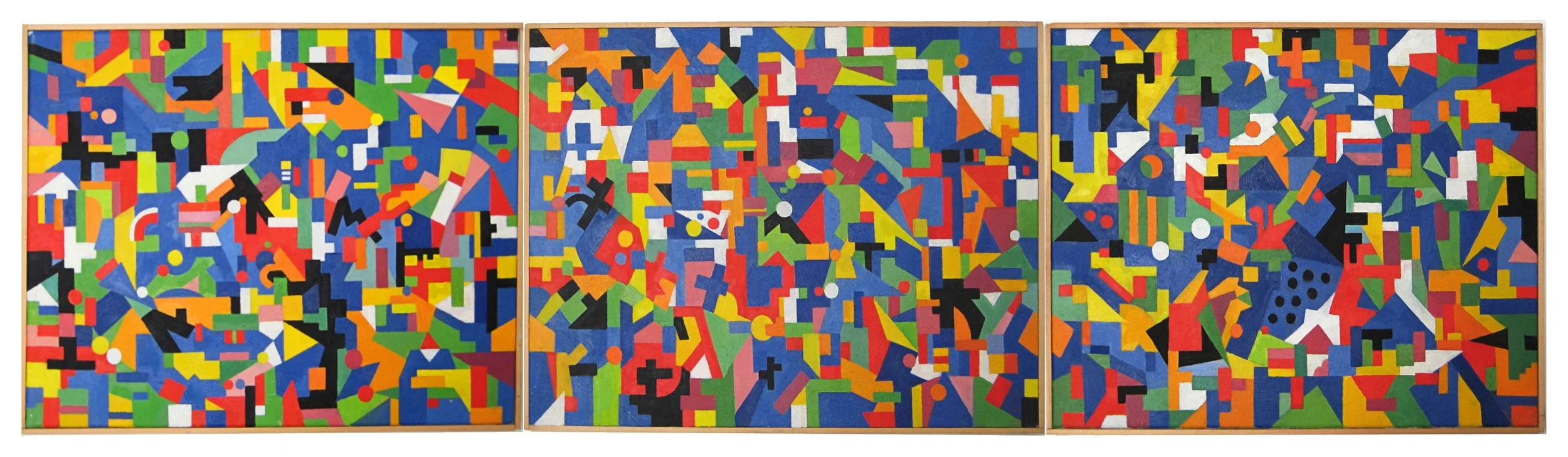
Alongside this scholarly work, Heathcote maintained a sustained artistic practice. His paintings and sculptures draw upon landscape, architecture, memory and the human figure, combining observed experience with a highly individual approach to structure and abstraction. Across different media, his work is characterised by an interest in rhythm, geometry and the transformation of lived experience into visual form.
Heathcote continued to paint and make sculpture throughout his life, developing a body of work that sits between European modernism and the profound influence of his experiences in Africa. His artistic and scholarly practices were ultimately inseparable: both were driven by a sustained curiosity about how people make, inhabit and understand the world around them.
Art & Practice…
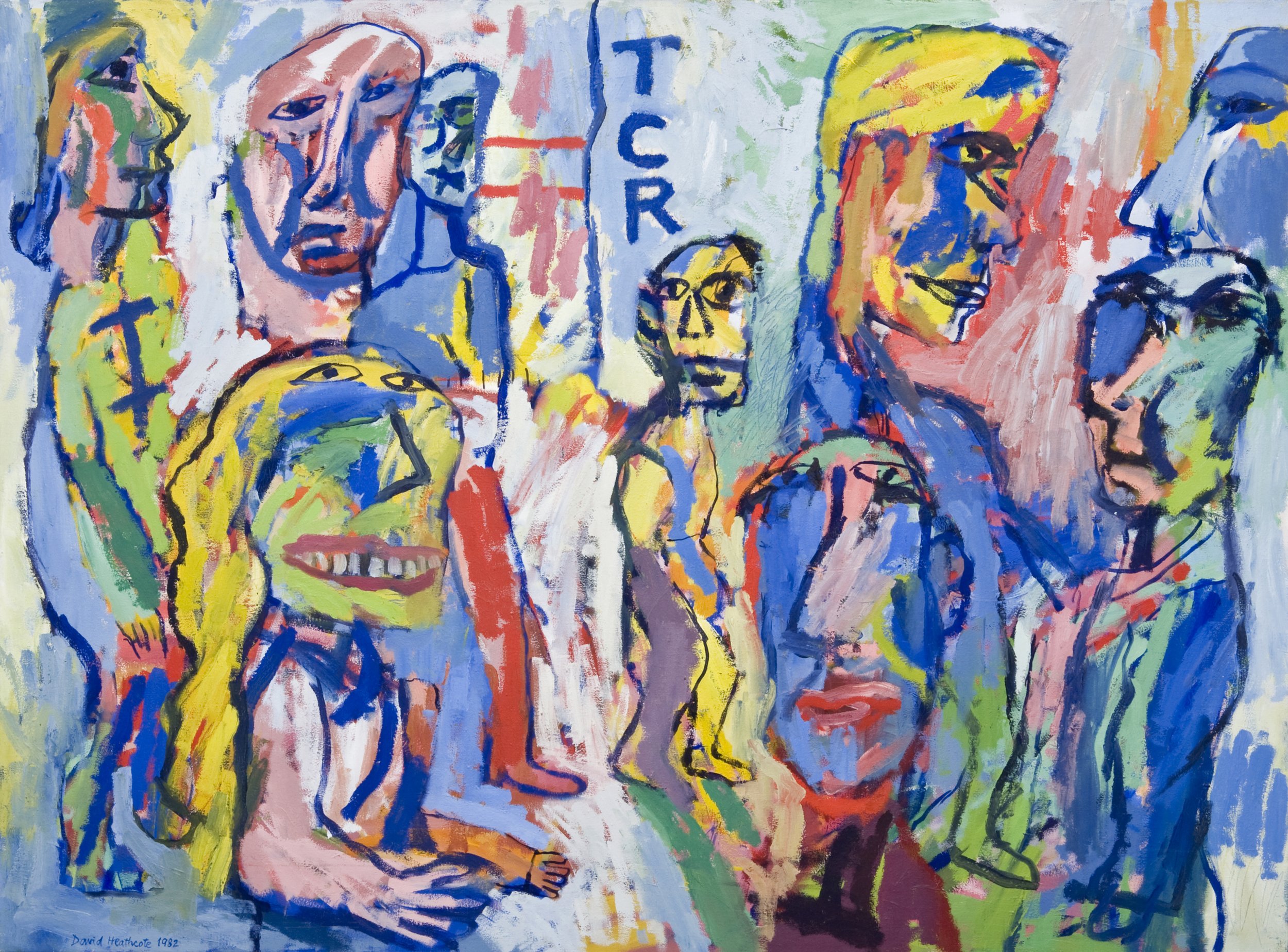
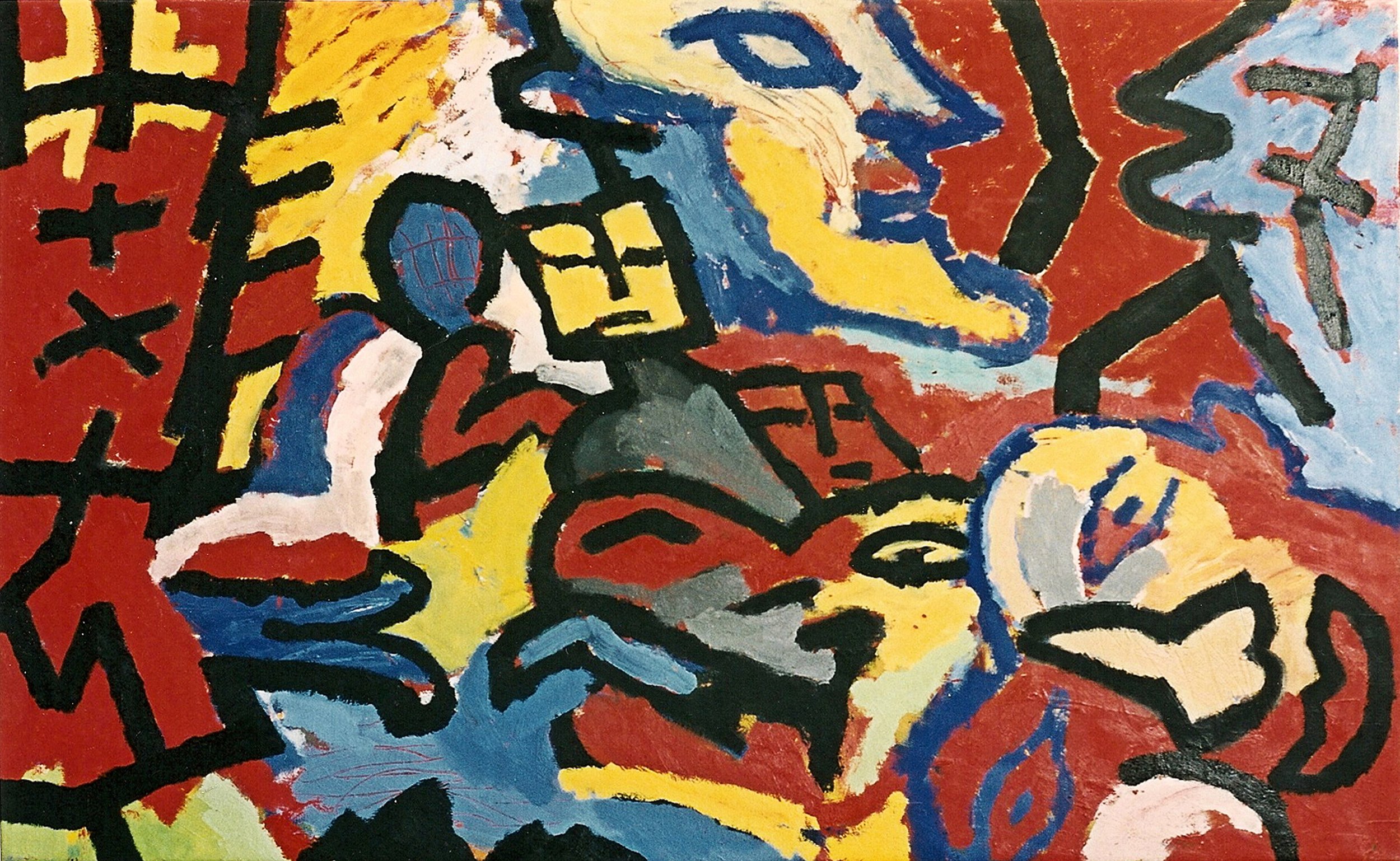
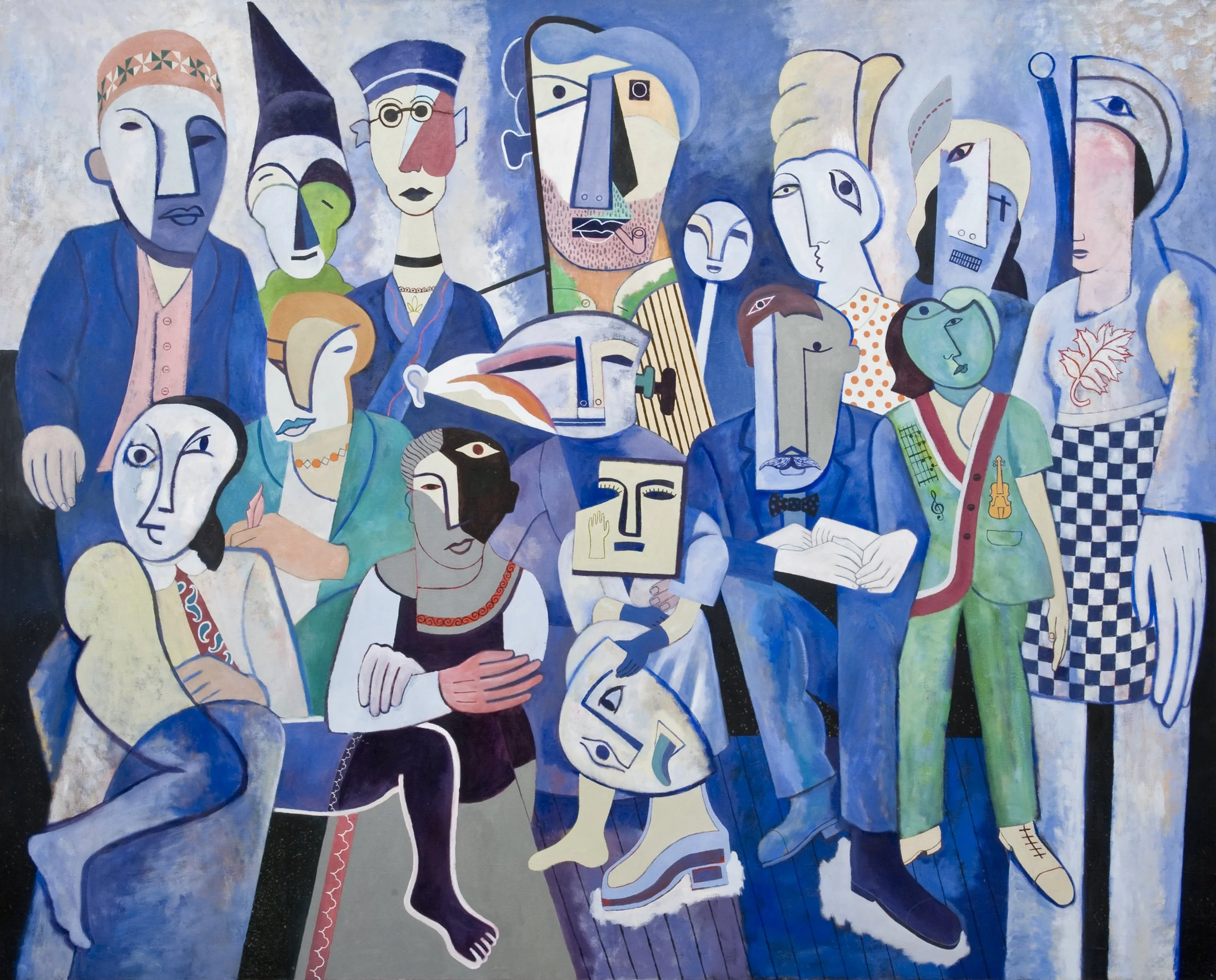
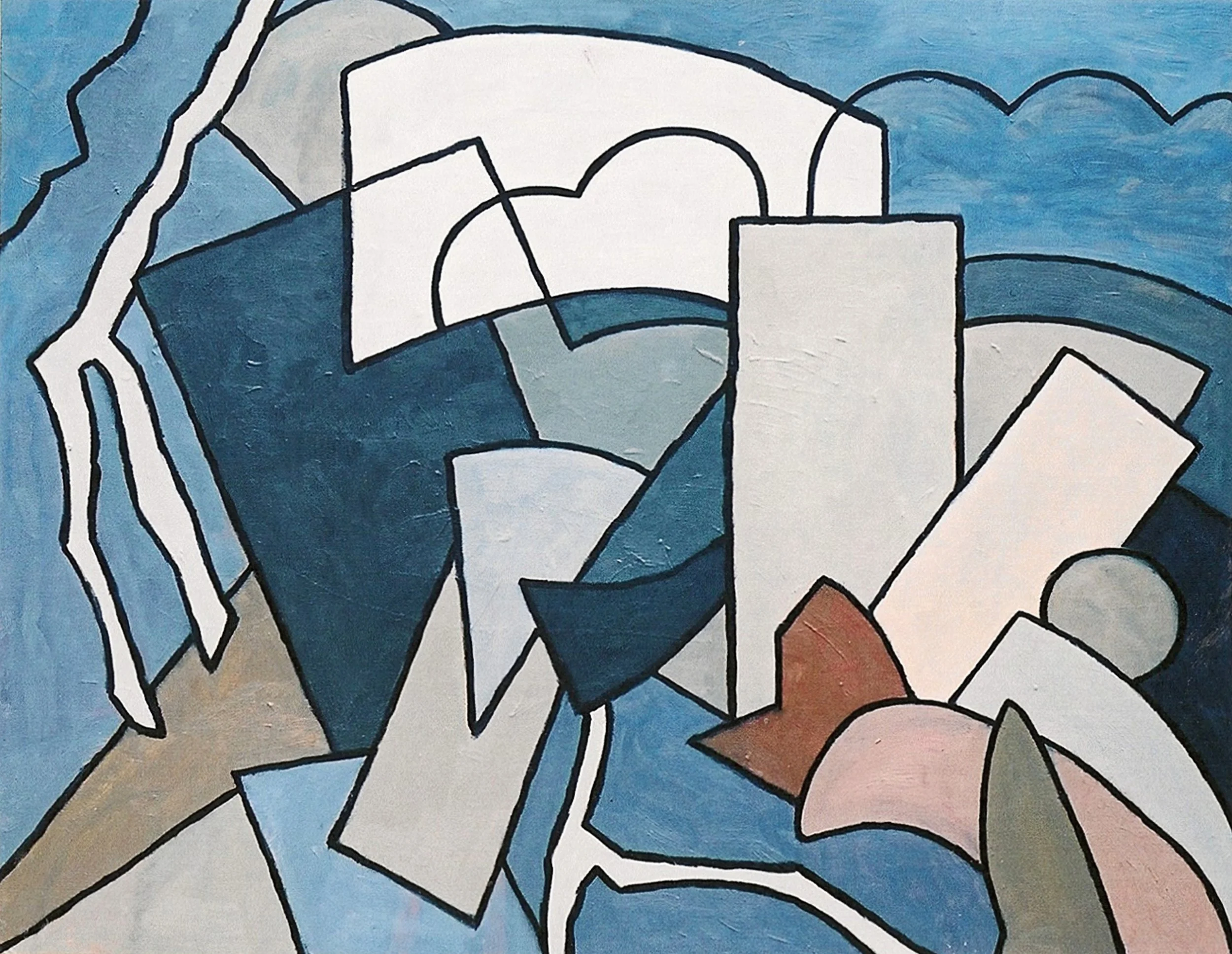
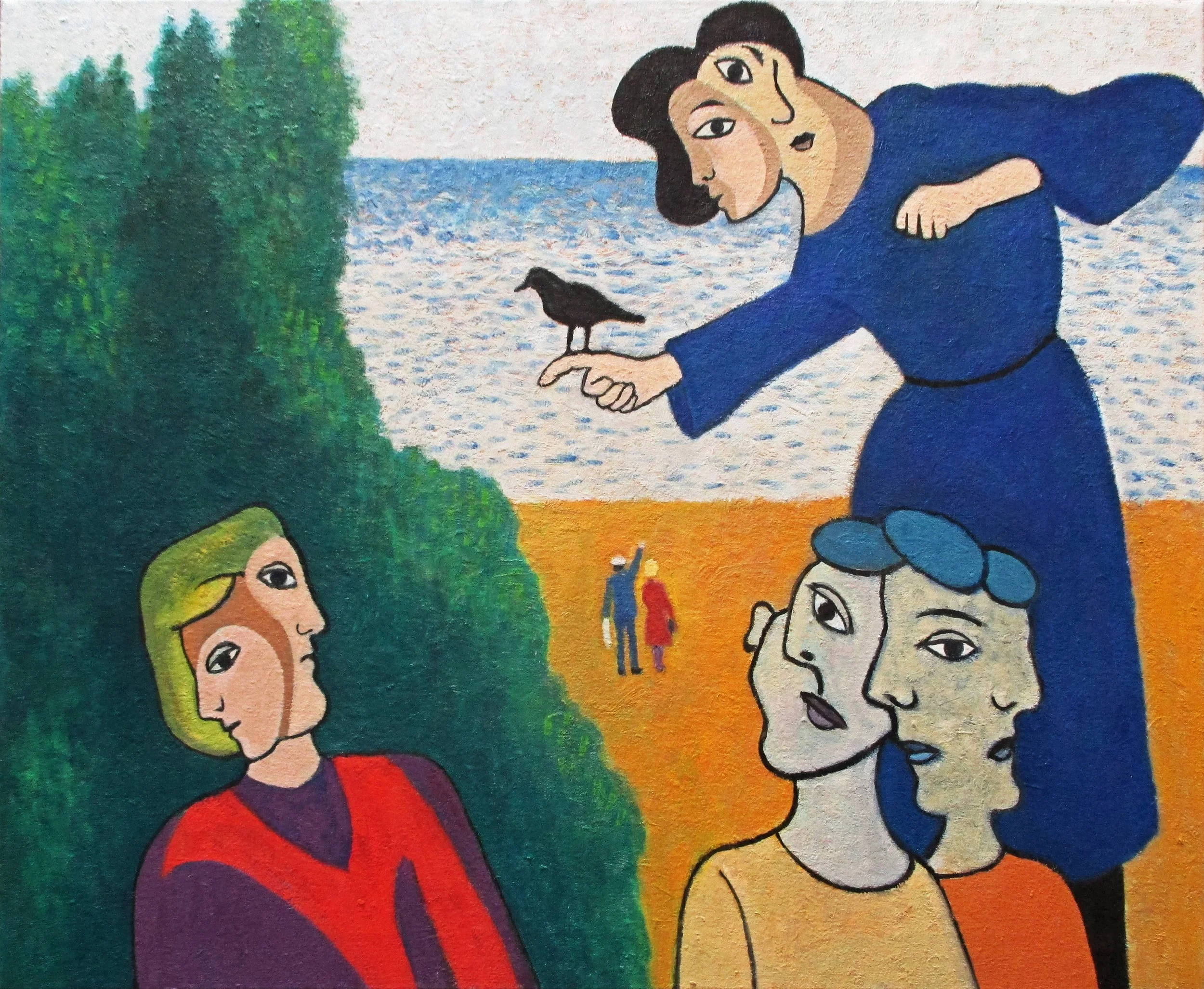
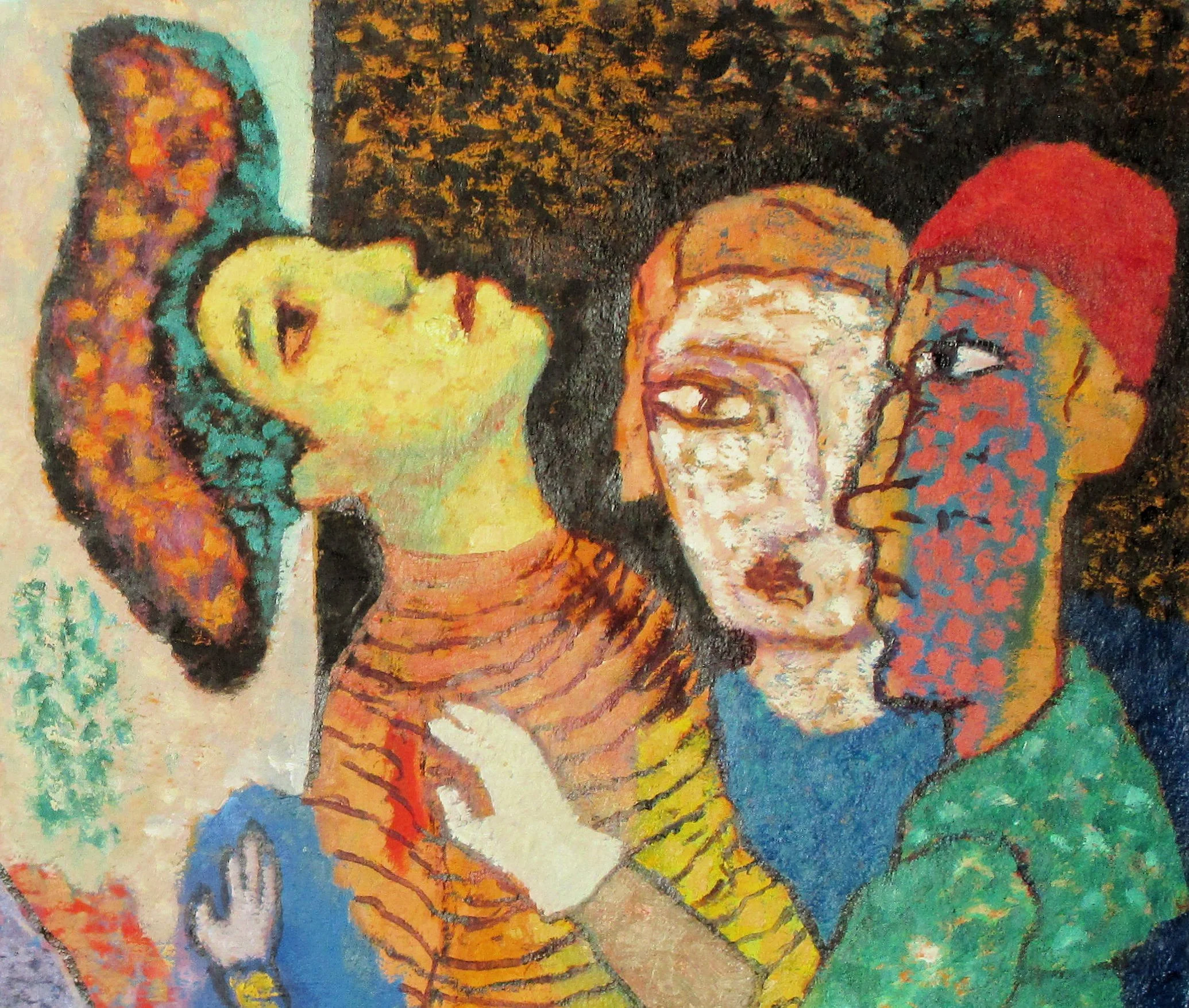
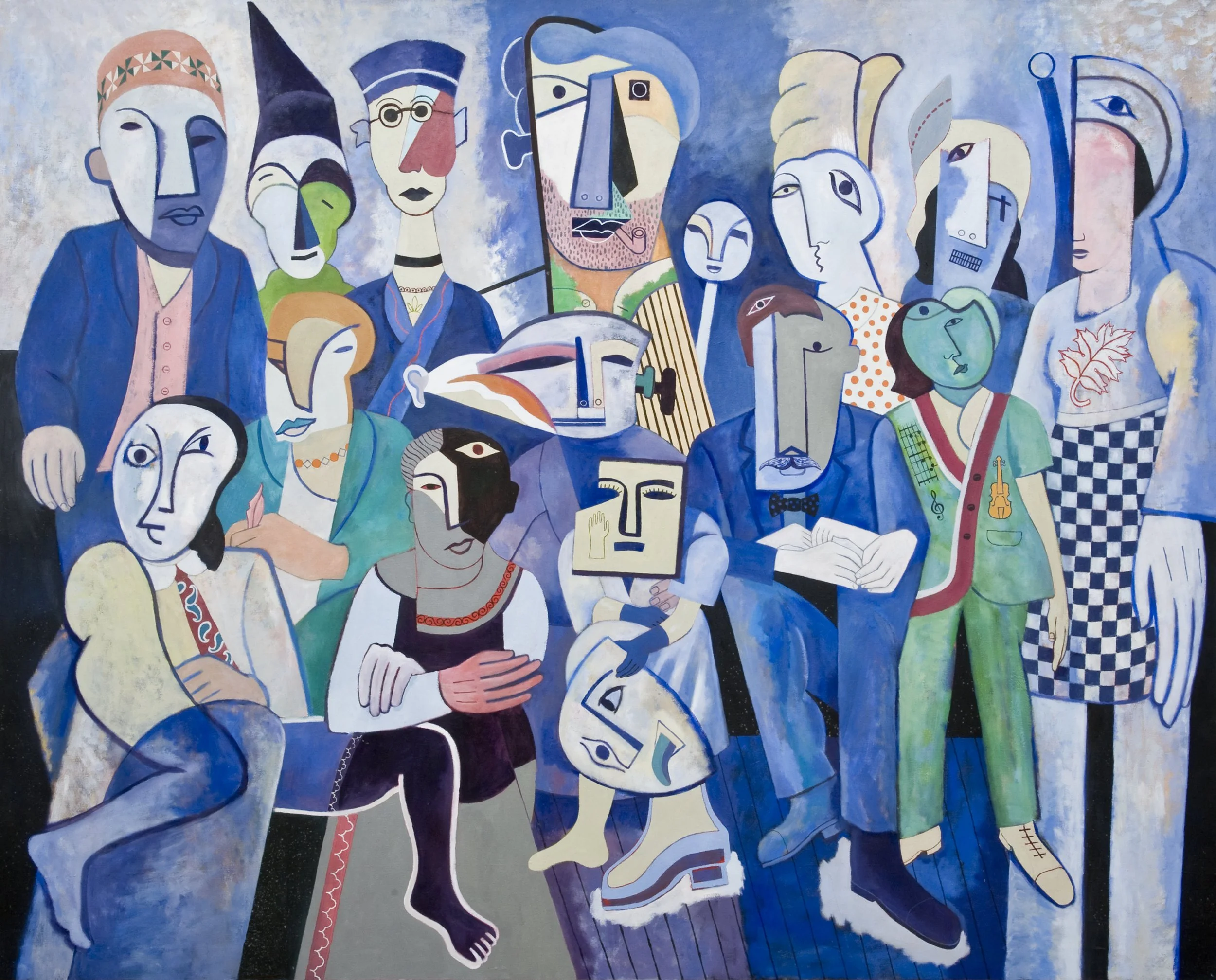
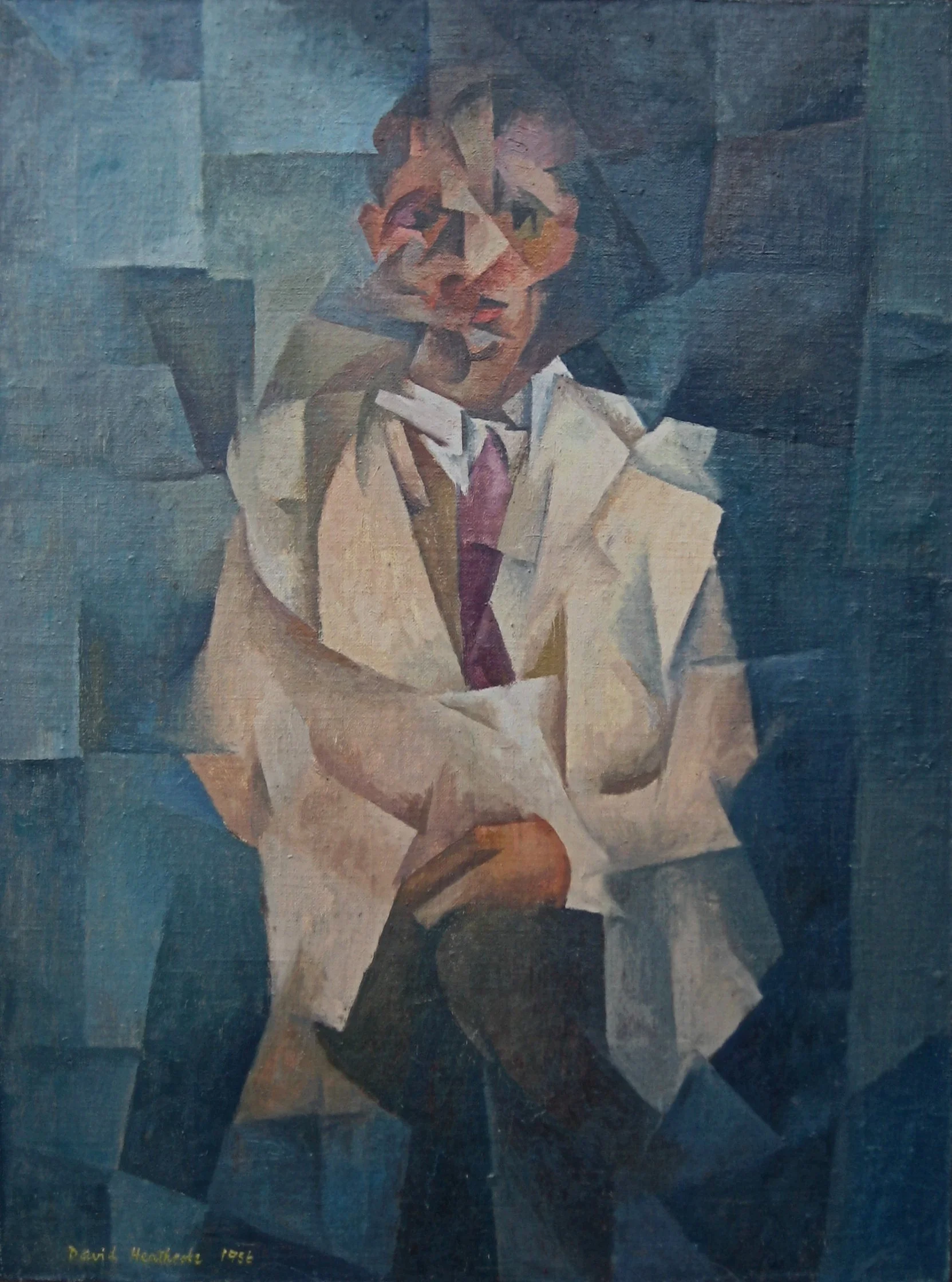
David Heathcote’s artistic practice developed across painting, sculpture, drawing, collage and printmaking, with painting remaining the principal medium through which he explored his ideas about place, memory and form. His work is characterised by a distinctive synthesis of observation and abstraction, transforming landscapes, figures and architectural structures into compositions of rhythm, geometry and colour.
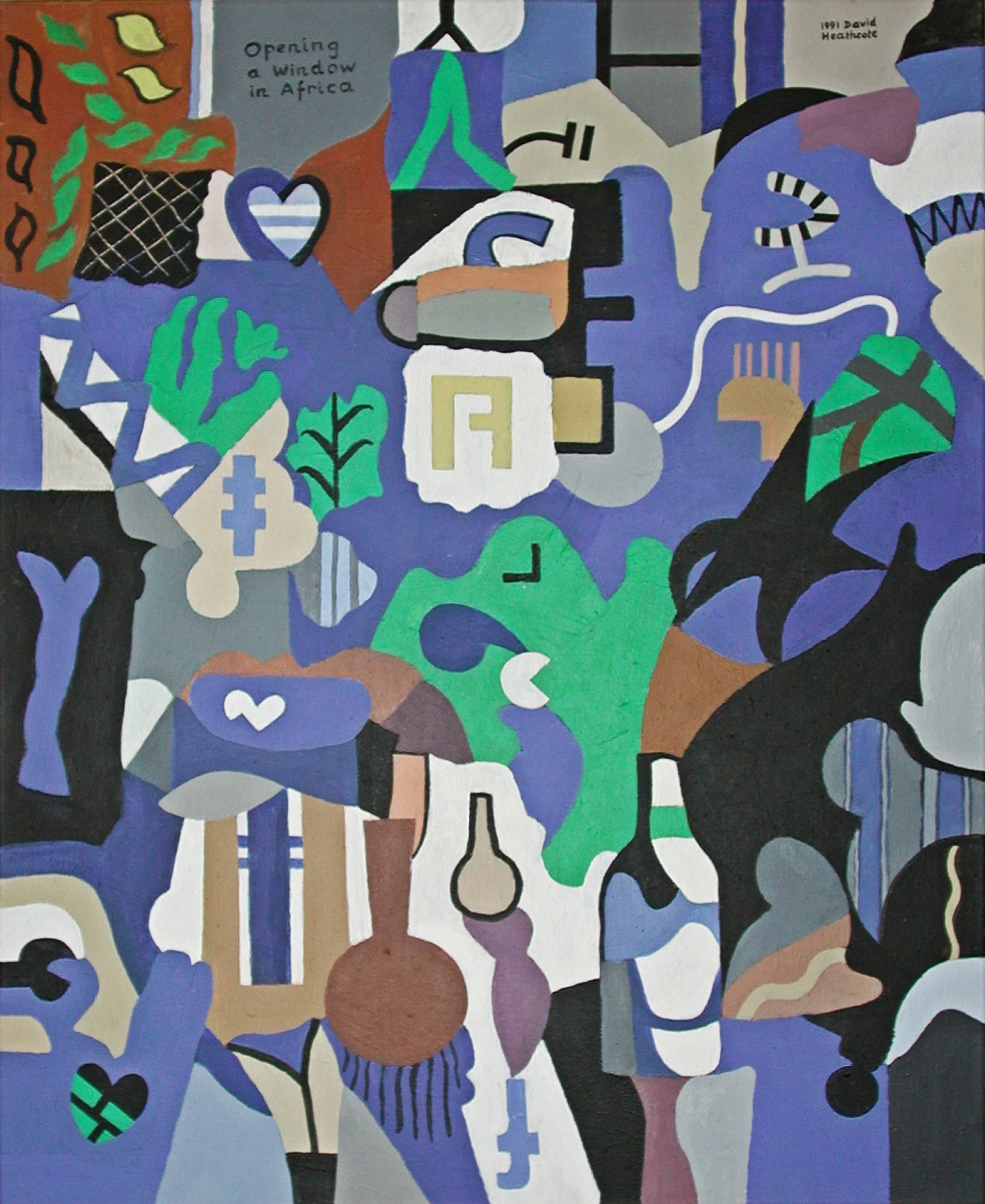
His years in Africa had a profound influence on this visual language. Rather than treating African art simply as a source of imagery, Heathcote engaged deeply with its material, cultural and intellectual contexts. His study of Hausa art and architecture informed a wider understanding of pattern, structure and ornament that found its way into his own work.
Sculpture provided a further dimension to this enquiry. Working in materials including clay, stone and bronze, Heathcote explored the relationship between mass, surface and space, often reducing the human or architectural form to essential shapes. His sculptures share with his paintings an interest in structure and rhythm, while retaining a strong sense of the physical and tactile.
Across his practice, Heathcote resisted a strict separation between observation and imagination. Landscapes became constructions of memory; architectural forms were distilled into abstract arrangements; and figures were reduced to their essential physical presence. His work occupies a space between representation and abstraction, grounded in the visual world but transformed through a highly individual sensibility.
His artistic practice and his scholarly engagement with African art were closely connected. Both arose from an enduring curiosity about how cultures express themselves through objects, images, materials and built environments. This dialogue between art, anthropology, place and memory became one of the defining characteristics of Heathcote’s work.
Gallery